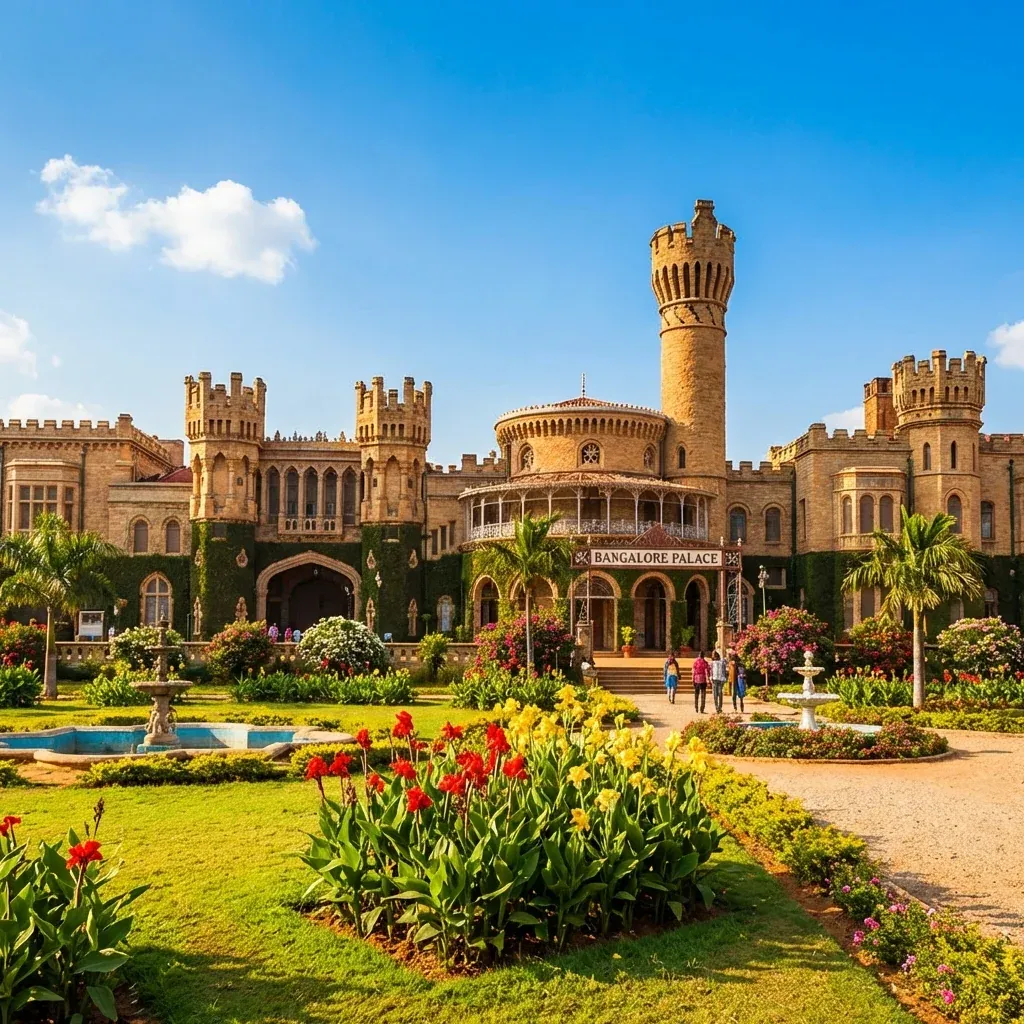
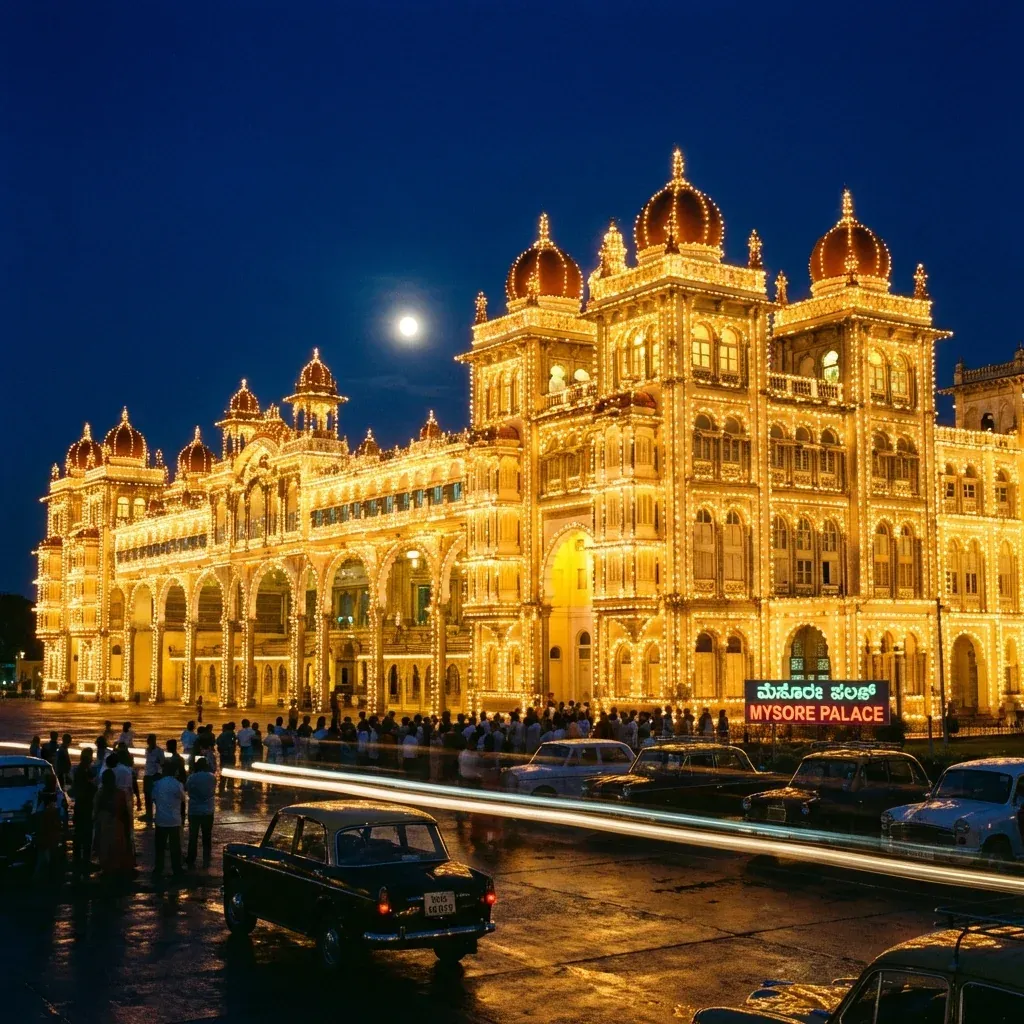
Mysore Palace, historically known as Amba Vilas Palace, is situated in the heart of Mysuru District, Karnataka. It stands as the official residence of the Wadiyar dynasty and the seat of the Kingdom of Mysore. Blending Hindu, Mughal, Rajput, and Gothic architectural styles, this palatial marvel is India's most visited monument after the Taj Mahal, fascinating global travelers with its ornate halls and breathtaking illuminations.
Mysore Palace
The Amba Vilas — A Spectacle of Indo-Saracenic Grandeur and Wadiyar Legacy
A Glimpse into History
Origins – The Old Wooden Palace (14th Century)
The palace was first built within the old fort in the 14th century by the Yaduraya Wodeyar. Over centuries, the structure underwent multiple destructions and rebuilds. Tragically, in 1897, the beautiful wooden palace built by Tipu Sultan and subsequent Wadiyar kings burned down entirely during the wedding ceremony of Princess Jayalakshammani.
Evolution – The New Masterpiece (1897–1912)
Maharaja Krishnaraja Wadiyar IV and his mother commissioned the British architect Lord Henry Irwin to construct a new, fireproof palace. Constructed between 1897 and 1912 at a massive cost of ₹41 lakh, the present three-story stone structure is a masterpiece of Indo-Saracenic architecture, featuring a 145-foot five-story tower with a gilded dome.
Modern Era – Heritage Open to All
Following Indian independence and the abolition of privy purses, Mysore Kingdom merged into the republic. A large portion of the Amba Vilas Palace was transitioned into a state museum overseen by the Karnataka government, while the royal family continues to reside in a private wing. It draws upwards of 6 million visitors yearly, making it a pivotal pillar of Karnataka's tourism.
Significance
Mysore Palace is an architectural triumph, boasting intricate rosewood doors, stained glass ceilings from Scotland, and the glorious Kalyana Mantapa (Marriage Pavilion) with its peacock motifs. The renowned Ambari (golden howdah)—carrying 84 kgs of gold—is historically used during the grand Dasara procession. The palace houses an armory, beautiful bronze statues, and an expansive courtyard that perfectly frames the grandeur of South Indian royalty.
Festivals & Events
Mysuru Dasara (September–October)
The legendary 10-day state festival (Nada Habba) culminates here with the Jamboo Savari (elephant procession). The palace grounds host spectacular cultural performances, military parades, and wrestling matches. The golden howdah carrying Goddess Chamundeshwari originates from the palace courtyard, a tradition upholding centuries of royal heritage.
Illumination (Weekends & Holidays)
Every Sunday and public holiday evening (from 7:00 PM to 7:45 PM), the palace transforms into a glowing jewel, illuminated by nearly 100,000 incandescent bulbs. Accompanied by the police band playing instrumental ceremonial music, this visual spectacle attracts thousands of spectators.
Did You Know?
The ornate chandeliers hanging in the palace's public durbar hall are of Czechoslovakian origin. Additionally, the exquisite stained glass ceiling in the Kalyana Mantapa was imported directly from Glasgow, Scotland. The palace is so vast that it incorporates two huge durbar halls, a solid silver door, and an array of secret tunnels connecting to Srirangapatna and other confidential locations originally used by the kings.
Travel Guide
How to Reach
By Air: Mysore Airport (MYQ) is domestic (~11 km); Kempegowda International Airport (BLR) in Bengaluru (~170 km) is the nearest major international hub (approx. 3.5 hrs via the expressway).
By Train: Mysuru Junction (MYS) is barely 2 km from the palace gates. Direct trains like the Vande Bharat and Shatabdi run frequently from Bengaluru, Chennai, and other major cities.
By Road: Very accessible from Bengaluru via the new NH-275 Mysore-Bengaluru Expressway (about a 2.5-hour drive). City buses drop you close to the palace gates directly.
Best Time to Visit
Sept–Mar: The best and most pleasant time; the weather is cool and breezy. October is incredibly special for witnessing the extravagant Mysuru Dasara festival, though accommodations must be booked months in advance. Summer (Apr–June) gets warm but early morning or late afternoon visits are perfectly manageable.
Local Attractions
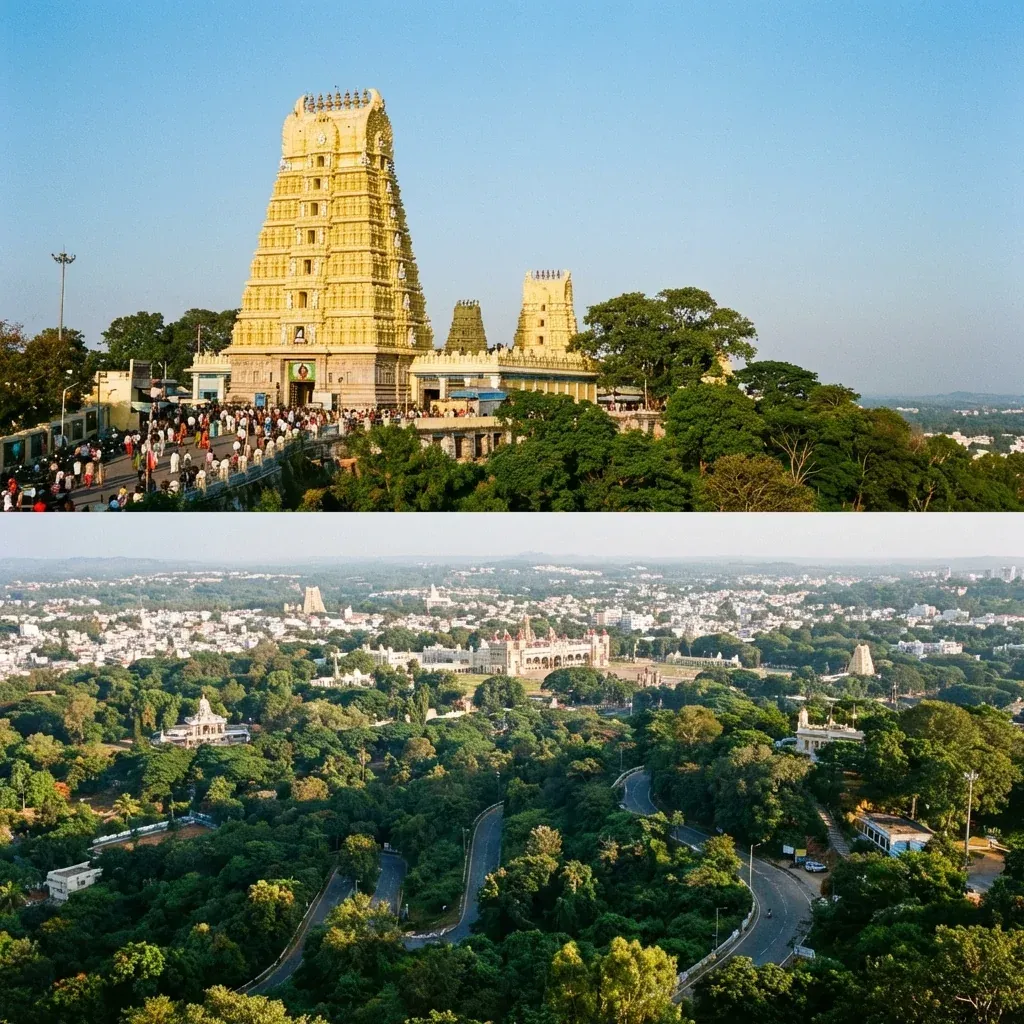
Chamundi Hills (~13 km): The guardian deity temple of Mysuru, offering panoramic city views.
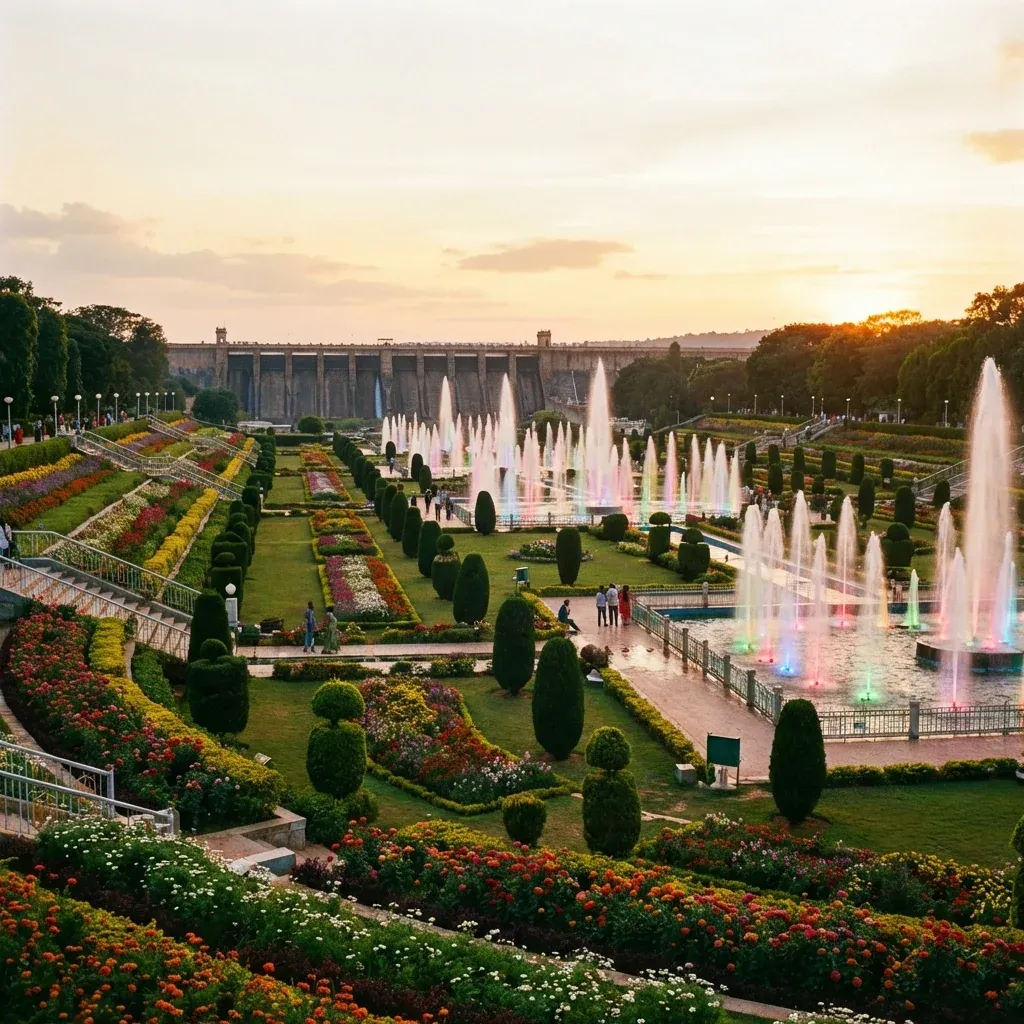
Brindavan Gardens (~20 km): Famous sprawling gardens with musical fountains next to KRS Dam.
Jaganmohan Palace Art Gallery (~1 km): Features a remarkable collection of Raja Ravi Varma paintings.
St. Philomena's Cathedral (~3 km): Magnificent Neo-Gothic church, one of the tallest in India.
Tips for Visitors
Open daily from 10:00 AM to 5:30 PM. To really appreciate the interiors and architecture without rushing, allocate at least 2 hours.
Photography is now allowed inside using mobile phones (without flash), but professional camera gear might require special permissions at the entrance.
Shoes must be deposited at the free shoe rack counter before entering the main building. Expect to walk heavily on marble and tiled floors inside barefoot.
Government-approved audio guides are available in multiple languages at the ticket counter; they are highly recommended to understand the regal artifacts and history.
Location Map
Image Gallery